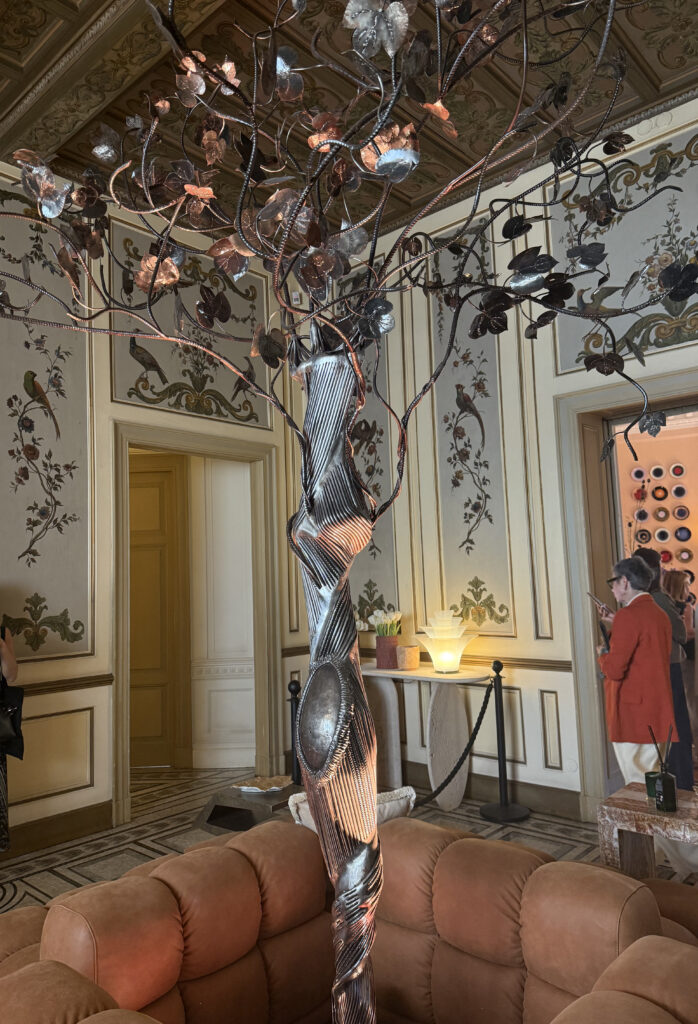
Behind the stately doors of Palazzo Donizetti, Artemest unveils a new chapter of L’Appartamento, the fourth edition. This year, Artemest leans fully into the idea of Italian Grandeur. Not as something fixed in the past, but as a sensibility, layered and expressive, that continues to evolve. A development deeply rooted in a culture where craftsmanship and beauty prove once more that they are two sides of the same coin.
Built in the 19th century, Palazzo Donizetti offers more than just a backdrop. There is something inherently cinematic about it. The embodiment of a nuanced identity, where Renaissance harmony meets Baroque drama and Liberty-style delicacy. Frescoed ceilings and a sculptural elliptical staircase lend the palazzo a sense of quiet spectacle, making it an ideal stage for a contemporary interpretation of Italy’s decorative and craft heritage.
This year, the exhibition unfolds as a journey through Italy—each space shaped not by function, but by place. The rooms dissolve into narratives, each one capturing the essence of a city.
Venice — The Reading Room
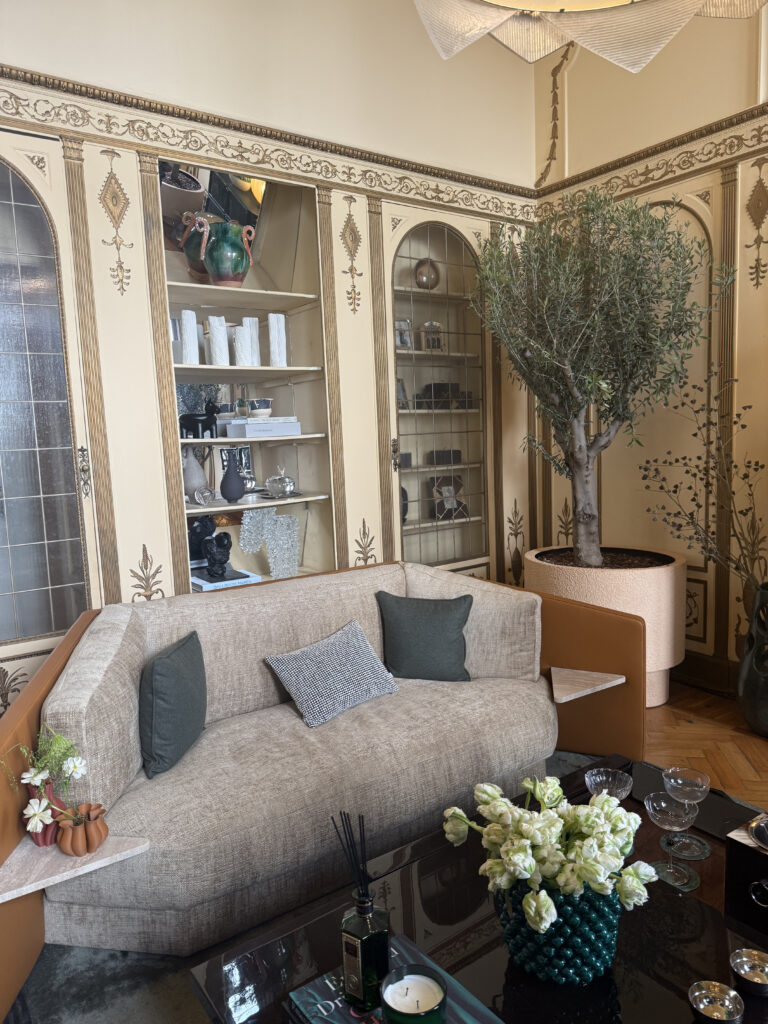
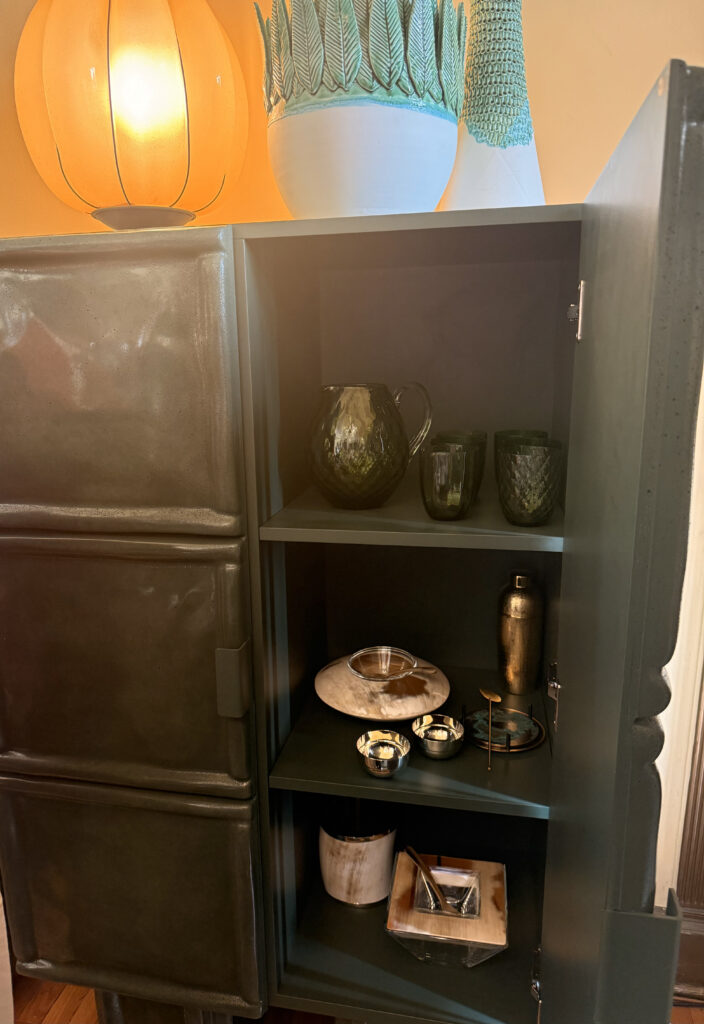
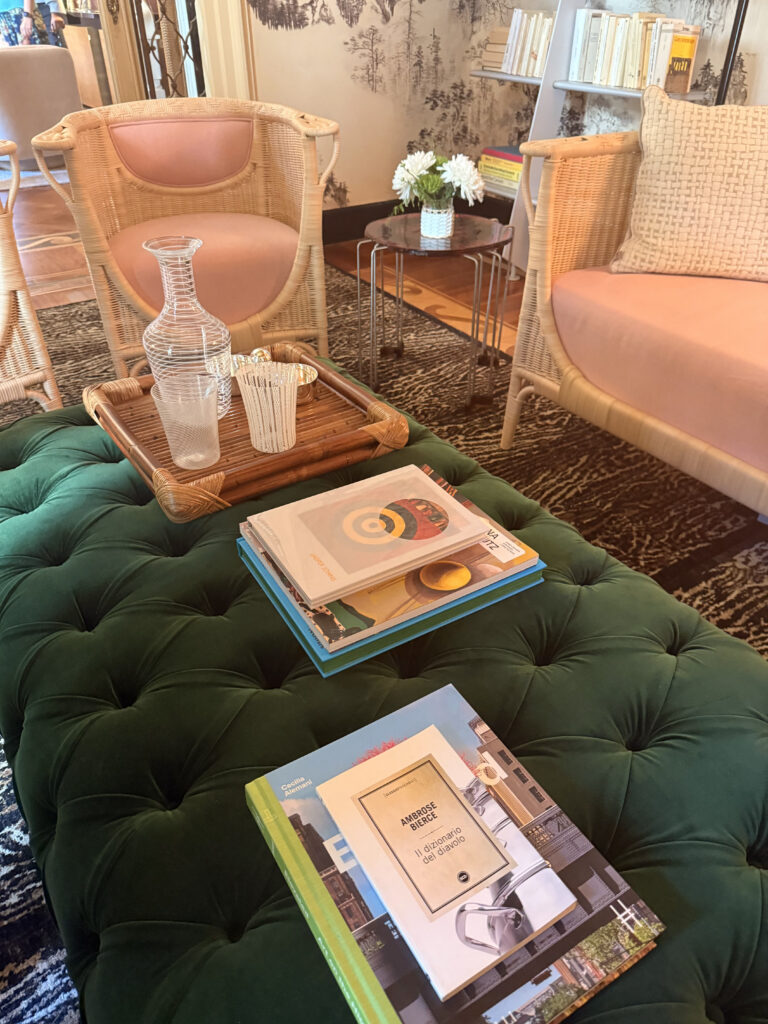
The transition is immediate yet subtle. Just off the entrance, the mood softens and becomes more introspective. Inspired by the quiet opulence of Venetian palazzi such as Palazzo Grimani, the room channels a sense of cultivated intimacy. While supple leather and glass introduce a tactile richness, long associated with Venice, long associated with Venice, engulfing deep green tones echo the lagoon. Light refracts through a Murano chandelier, casting a gentle glow across objects that feel collected rather than curated. The display invites you to pause, to read, to linger. It recalls the spirit of Casa Museo Fortuny, where art, life, and memory blur into one continuous and bridging narrative.
Napoli — The Dining Room
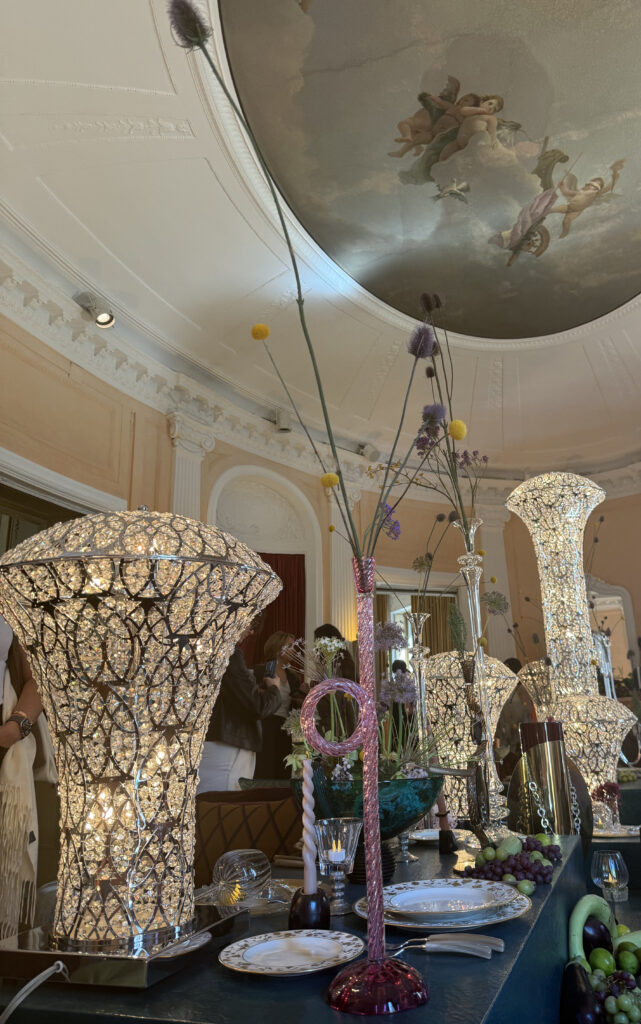
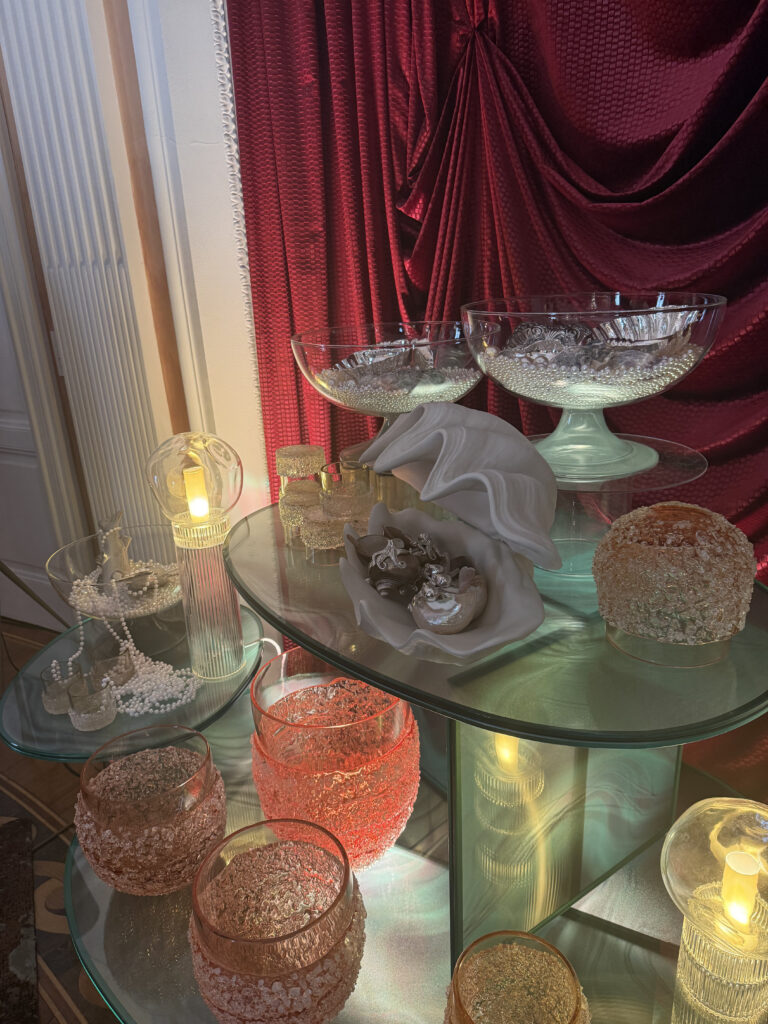
Now pivoting into rich expression. The dining room, inspired by Naples, showcases bold sentiment. Set within the palazzo’s grand oval space, the traditional idea of dining dissolves into something more fluid. The reference is ancient—Pompeian banquets, where dining was as much performance as ritual. Surfaces shimmer in gold, marble, and blue, evoking both the sea and the volcanic terrain that defines the city. It is immersive and deliberately excessive—in a way only Naples can be.
Rome — The Grand Salon
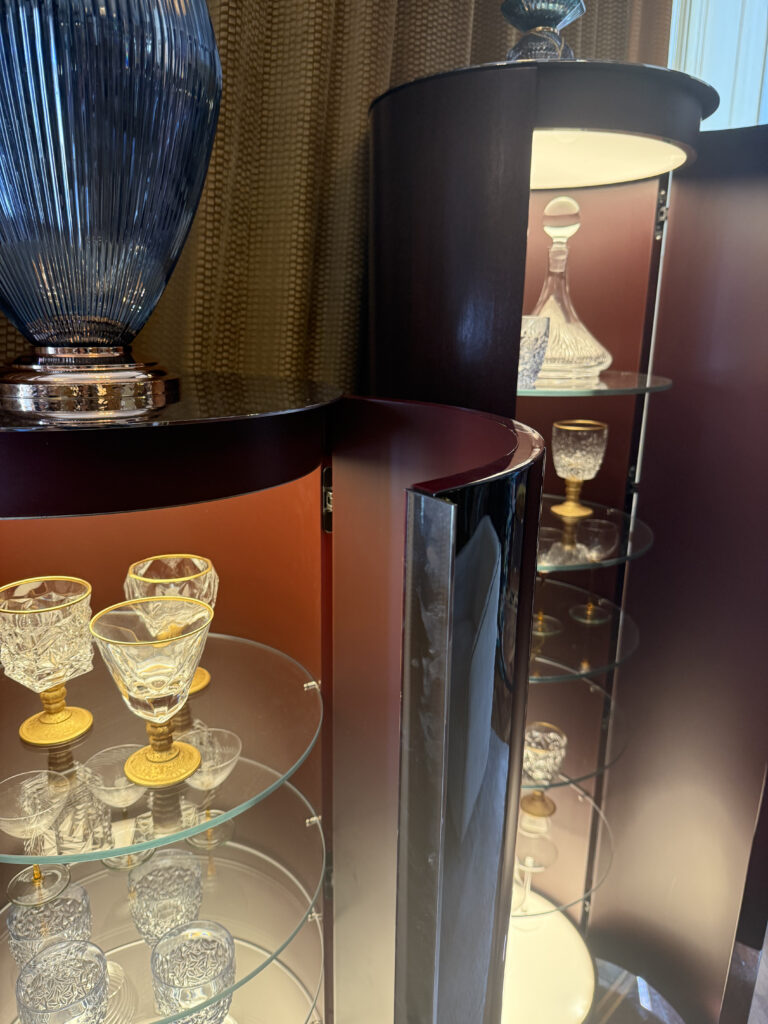
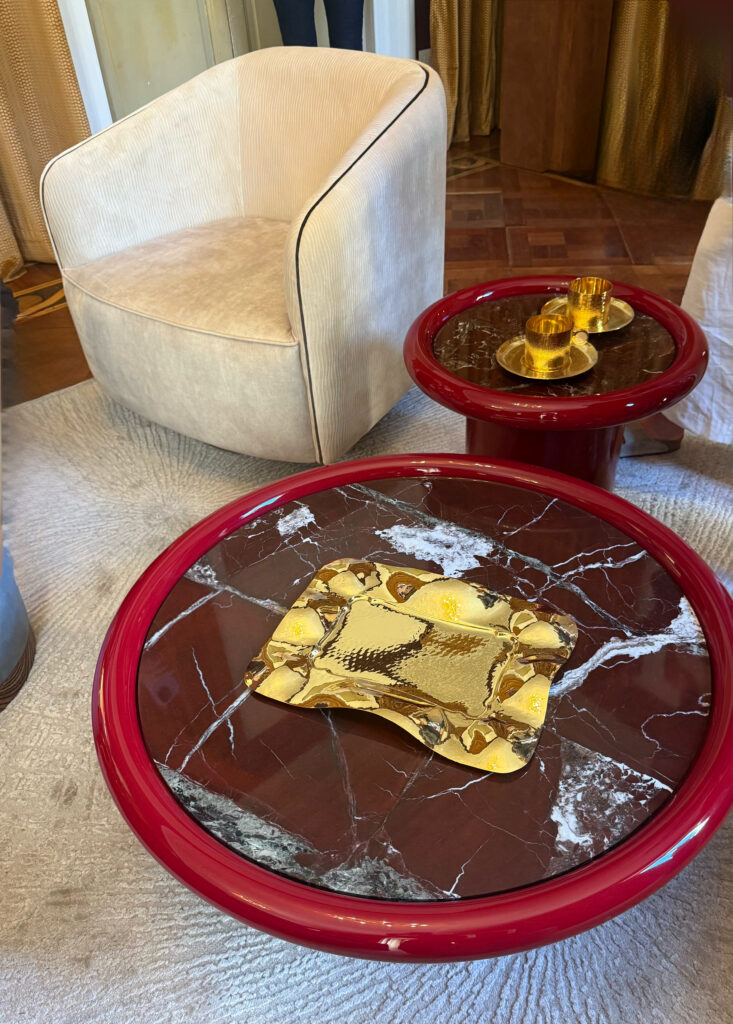
Then comes Rome, interpreted through mood and monumentality. The Grand Salon unfolds in shadow and light, where deep tones, reminiscent of weathered façades, anchor the space in history. Marble and metal add structure. It feels architectural yet intimate, a study in balance. The room depicts rhythm, a contemporary meditation on Rome’s enduring gravity.
Palermo — The Entertainment Salons
Then we find ourselves in Palermo—filtered through the faded grandeur of Palazzo Valguarnera-Gangi and the cinematic lens of Il Gattopardo. The salons feel less staged, more inherited. Furniture sits in loose conversation, arrangements are slightly undone, imperfectly perfect as though shaped over time. Textiles deepen the palette and opulence is clear, yes—but also ease. A lived-in elegance that resists perfection in favour of atmosphere.
Florence — The Alcove
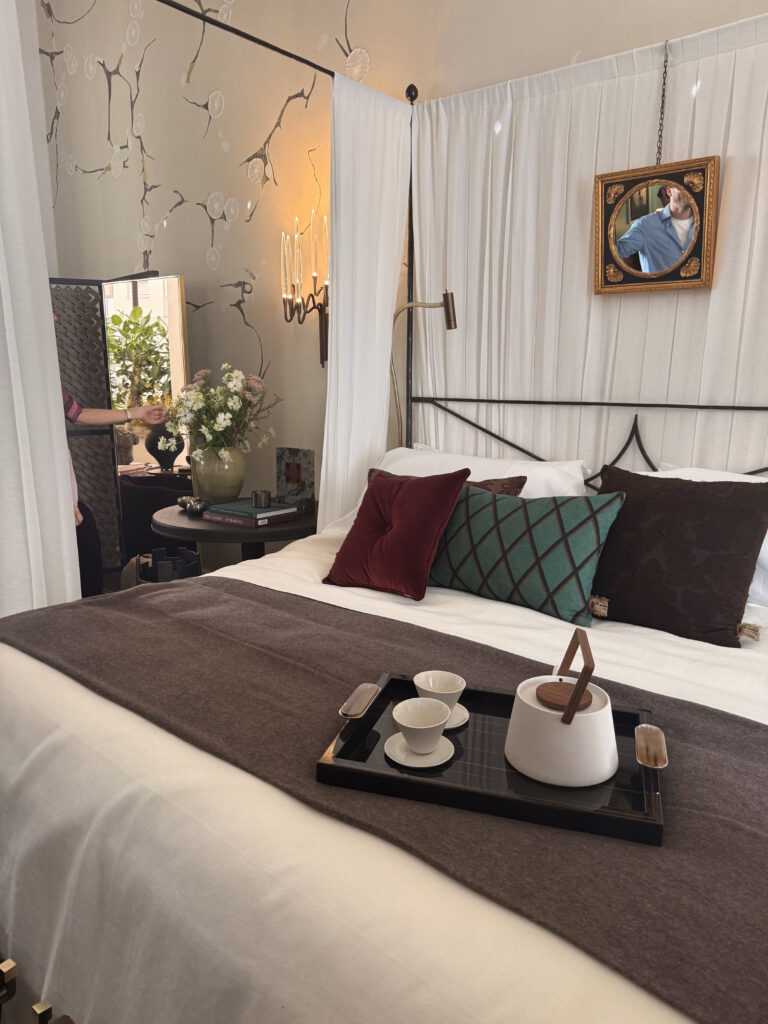
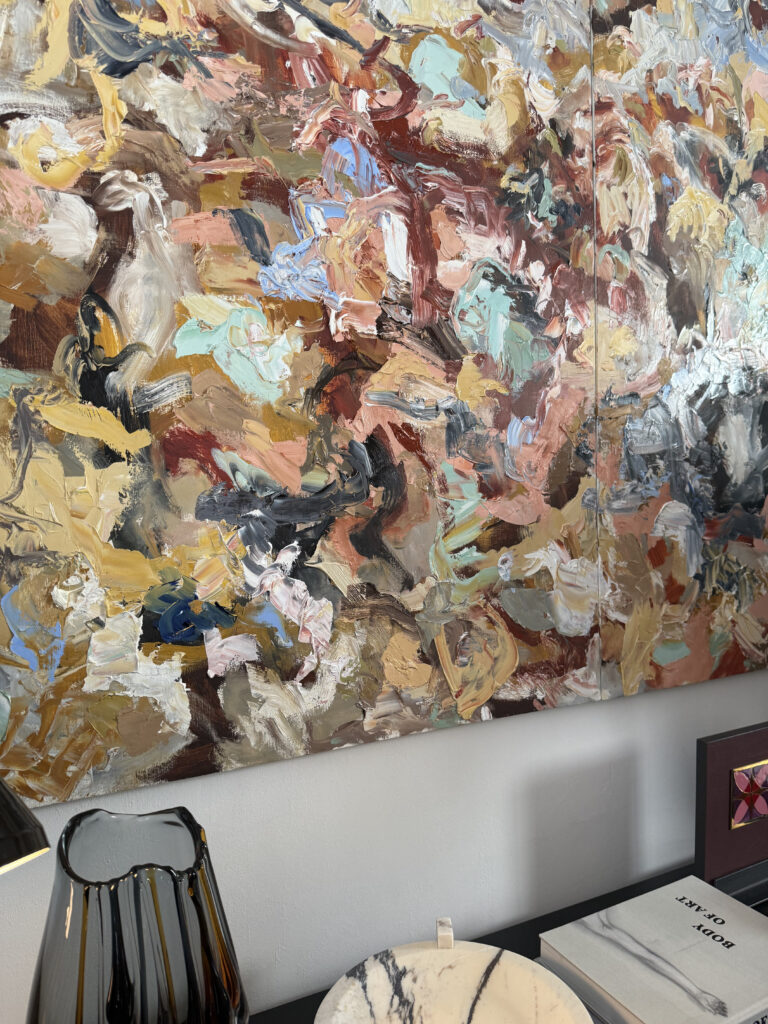
The journey culminates in Florence, where the pace slows and we observe. The alcove is all about details. It is conceived as a private retreat. Drawing from Renaissance interiors, it layers natural materials, such as wood, iron, and other textiles, into a space that feels both grounded and romantic. At its centre, a draped four-poster bed becomes a quiet focal point. Above it, a vintage mirror hangs, while directly opposite, a contemporary painting by Enrico Verger, a quiet richiamo a Botticelli. A subtle visual dialogue between vintage and contemporary emerges, where their paradoxical contrast resolves into a perfect sense of harmony. Curated by Urjowan Alsharifi Interior, The Alcove, in its design, shifts the focus away from display toward feeling, and returning craftsmanship to something deeply personal.
Pompeii — The Garden
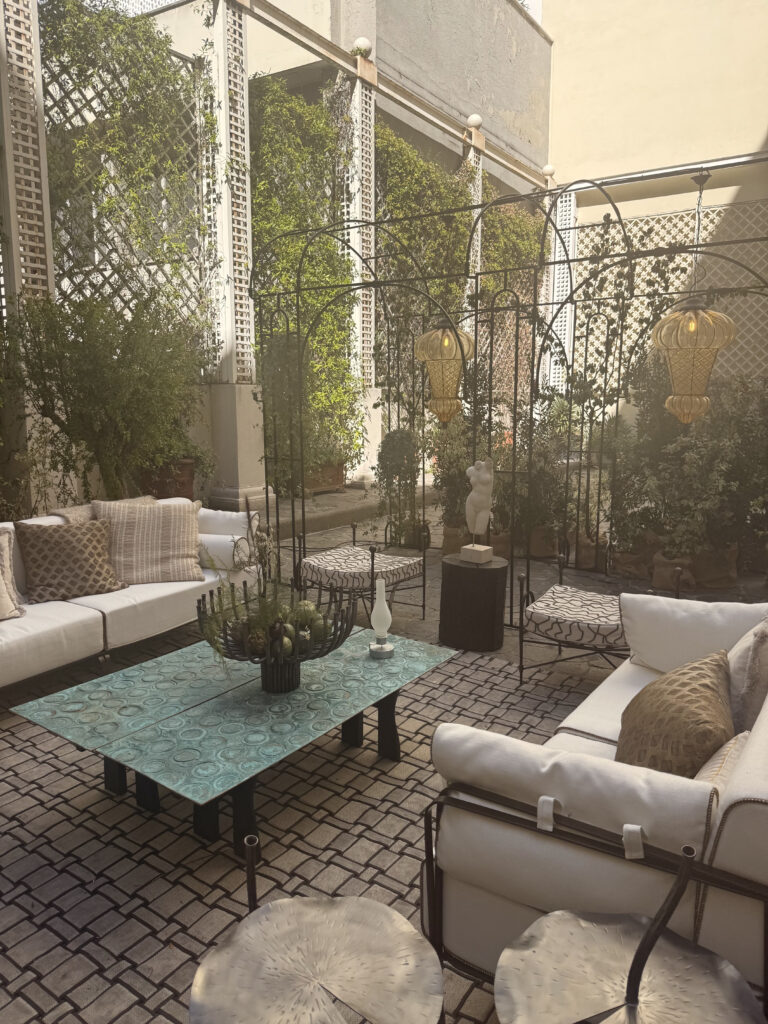
Finally in Outdoors, the narrative becomes more abstract. The garden references Pompeii through texture and material rather than literal form. Charred wood, oxidised metals, and stone surfaces suggest transformation and memory, while greenery modulates the composition. Between ruin and renewal, we find ourselves in a suspended moment that connects past and present.
Working in close collaboration with Charlap Hyman & Herrero, MAWD | March and White Design, Rockwell Group, Sasha Adler, and Urjowan Alsharif, Artemest shapes this edition of L’Appartamento as a more contemplative reading than in previous years, where each space is less a declaration than a feeling. An interplay of perspectives that, together, dissolve boundaries between memory and immediacy, object and atmosphere, into a single, continuous act of Italian storytelling.
Leave a Reply