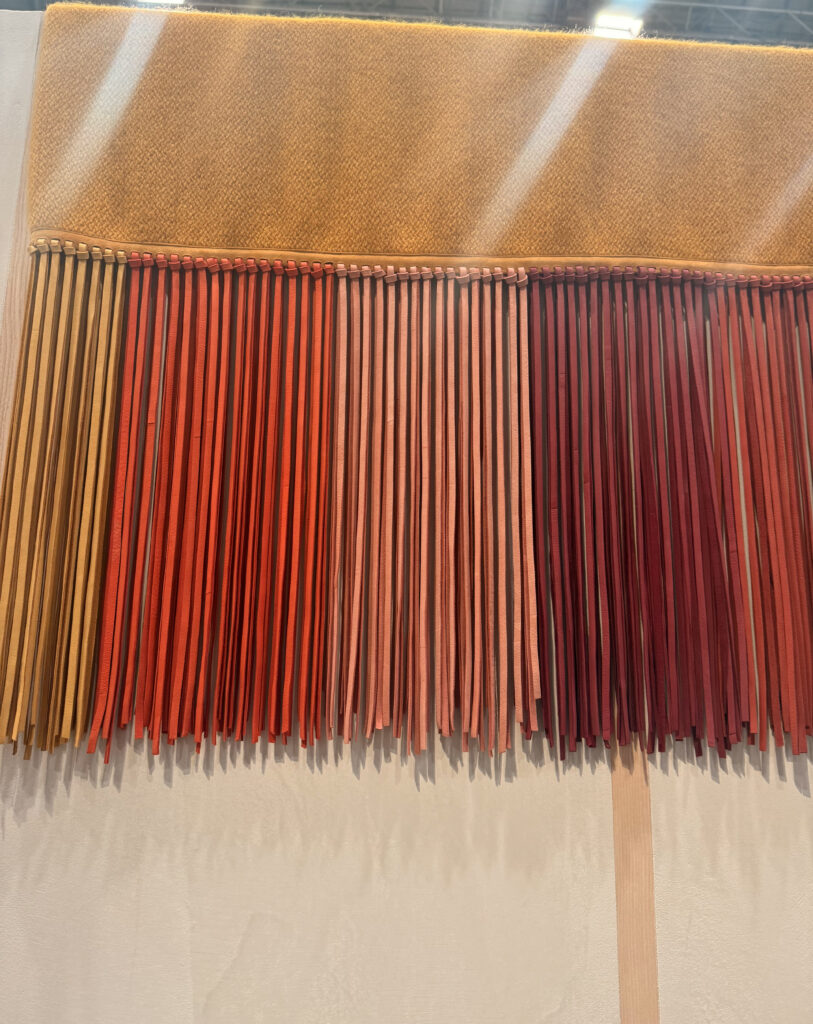
At Milano Design Week 2026, Hermès did not simply showcase objects; it constructed a spatial narrative where craftsmanship, movement and materiality defined the experience.
Within a maze-like space of small dividing walls, a traveler wanders. His wonder is met with spatial lines, shifts in perspective, and layered volumes: plaster and beechwood forms placed, ordered, and raised as though reflecting the most fundamental actions of occupying space. What is space, if left unoccupied? The arrangement develops with an almost natural logic—an architectural expression defined by flow and intention.
In this setting, material functions simultaneously as substance and visual language. Leather work steals the spotlight. It’s Hermès encoded but evoking a very stoic sensibility. Common items are elevated through signature craft. Charlotte Macaux Perelman and Alexis Fabry have indeed orchestrated a tailored equilibrium of contrast and form. Surfaces are no longer treated as simple finishes, but as articulations—each one exposing the exchange between matter and the hand that shaped it.
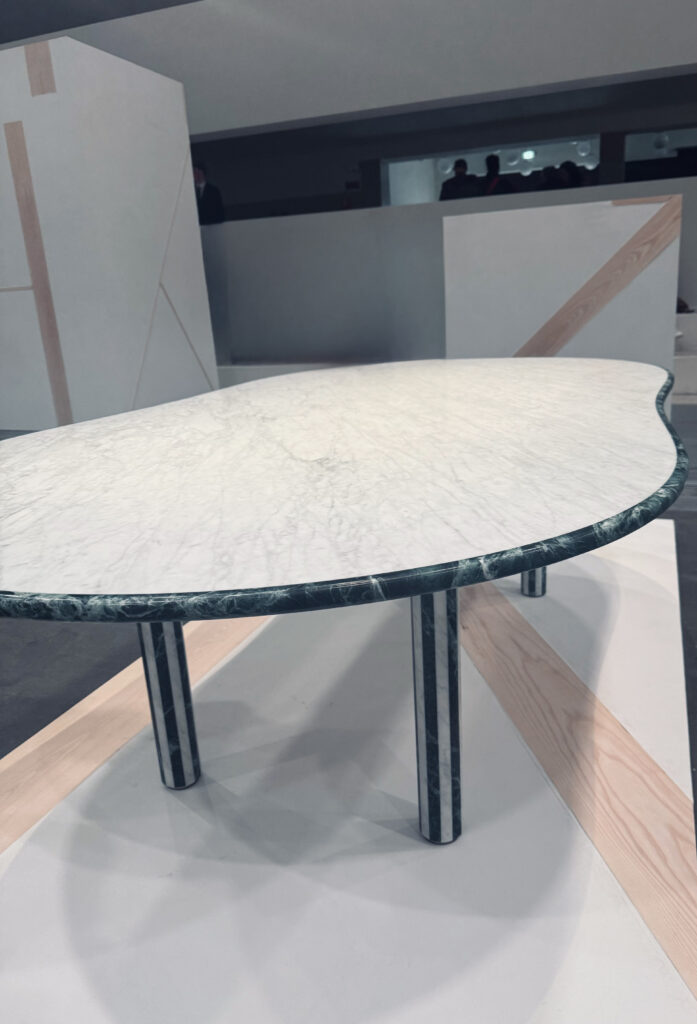
Among the defining pieces, the Stadium d’Hermès table, designed by Edward Barber and Jay Osgerby, captures the tension between structure and fluidity. Its figure-of-eight silhouette evokes both the curve of a horse’s back and the oval of a racetrack, subtly referencing the Maison’s equestrian heritage. Executed in Carrara Venato and Verde Alpi marble marquetry, the piece balances density with an unexpected visual lightness. The end result, reflects a level of technical precision where material becomes almost weightless in perception.
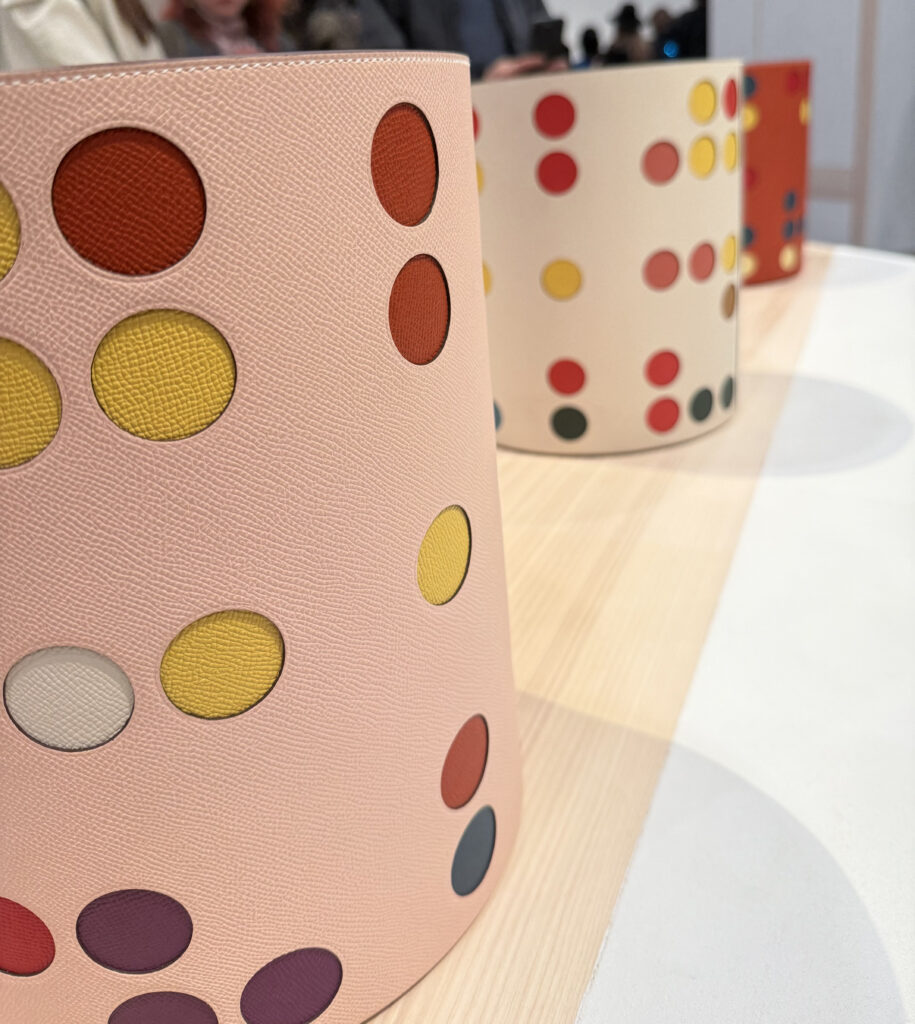
The dialogue between tradition and innovation continues and extends into Hermès’ textile exploration—particularly through two distinct approaches to weaving.
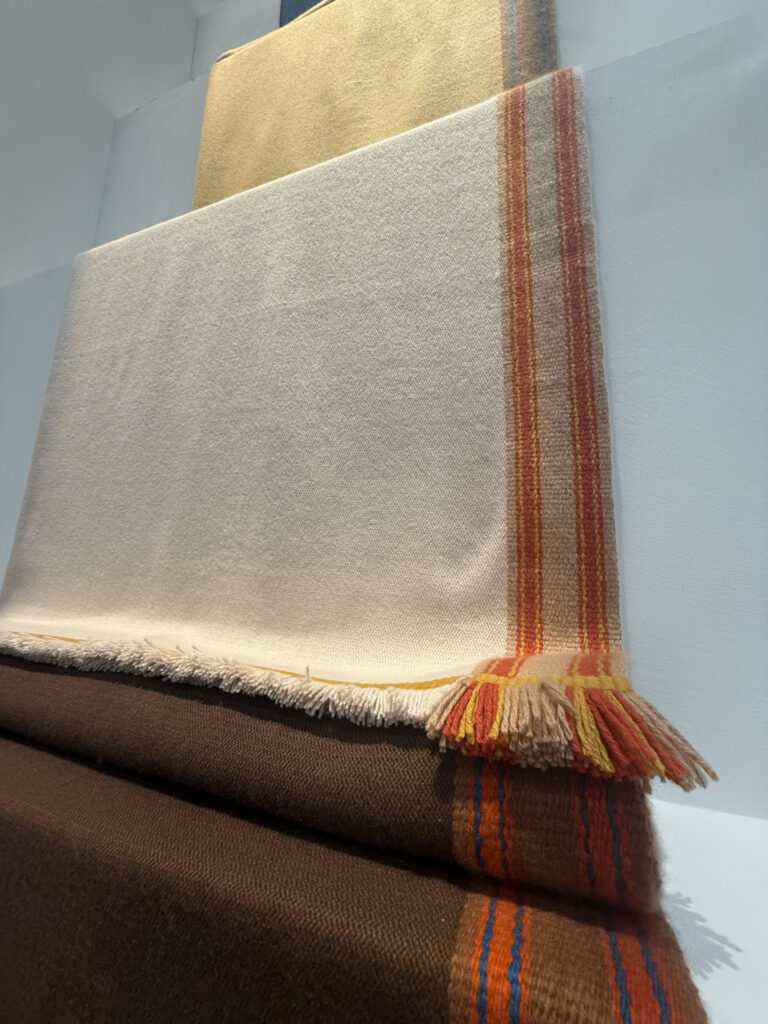
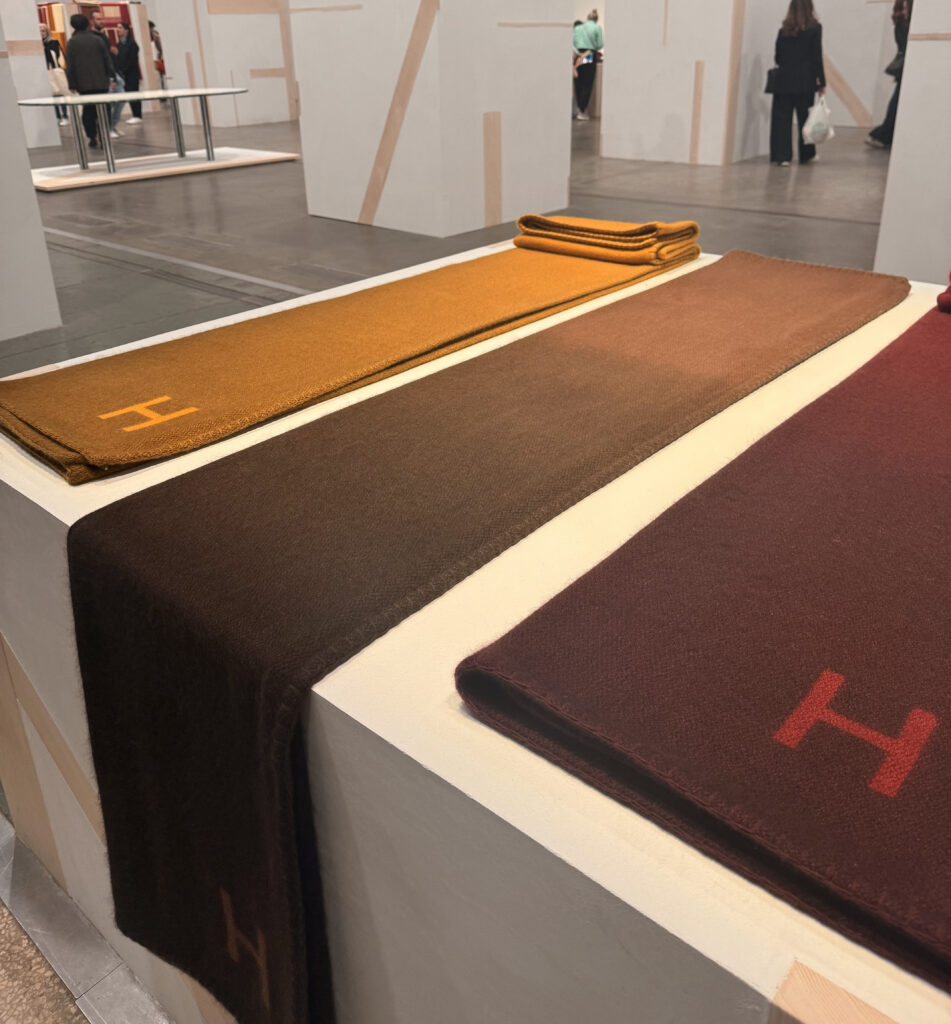
In one section, equestrian-inspired textiles traditionally used on horses. Historically crafted in wool, these are reimagined in cashmere using the jacquard technique. Unlike conventional weaving, jacquard embeds the pattern directly into the structure of the textile, making motif and material inseparable.
In contrast, another series follows a more fluid approach: the textile is first woven, and only then dyed. This reverses the logic of jacquard. Rather than predefining the pattern, color is introduced after construction, allowing it to interact with the material in a more organic way.
The result embodies how depth emerges through process rather than structure.
The distinction is subtle but essential. One method constructs design from within; the other allows it to surface through transformation.
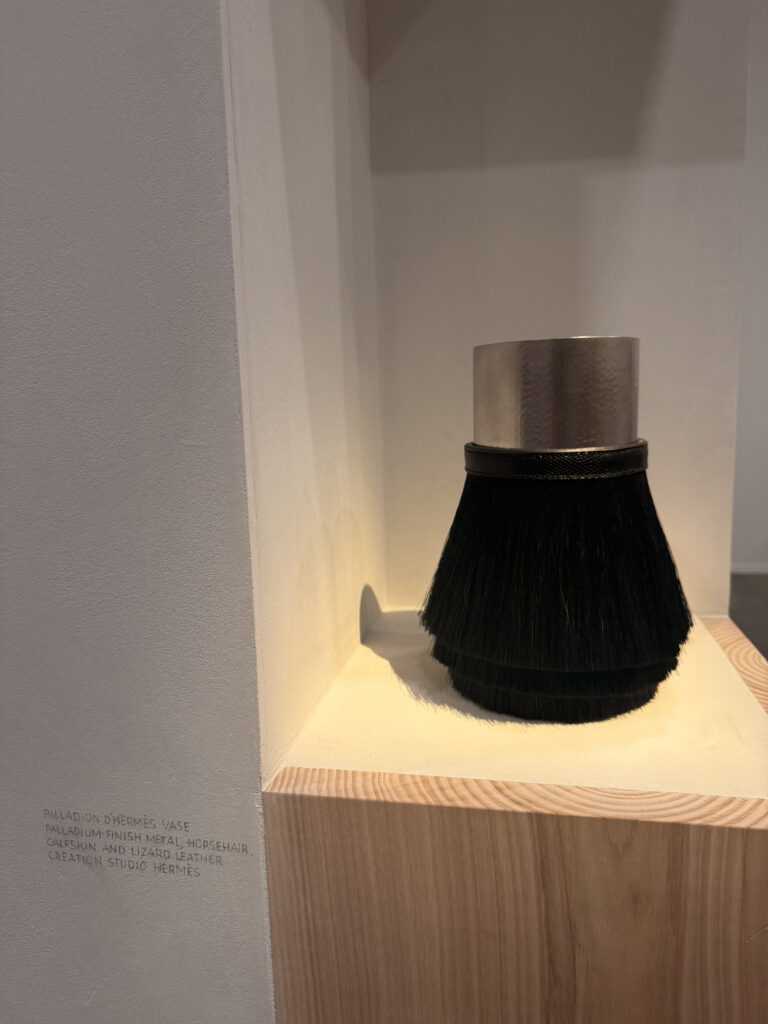
Elsewhere, the Palladion d’Hermès collection also introduces a series of home objects defined by material interplay. Hammered metal with a palladium finish is set against leather, horsehair, and wood, creating a tension between sheen and texture. Marked by the silversmith’s hand, the surfaces take on a light-catching quality. Centerpieces, jugs, and vases emerge as sculptural forms imbued with an almost talismanic presence.
Textile craftsmanship emerged as a central theme for the brand this Design Week, approached as a space for continuous experimentation. Handwoven in Nepal from cashmere—sometimes interlaced with linen— New throws were draped over sculptural pieces. When made, they were treated with resist-dyeing techniques before being carefully finished and joined through embroidery stitching. The result is both highly exacting and sensorially rich: a quiet celebration of artisanal mastery, defined by depth of process and exceptional softness.
Ultimately, the installation encapsulates Hermès’ ethos of restraint and precision, extending the exploration of lightness and spatial clarity established in last year’s Design Week exhibition.
Leave a Reply